
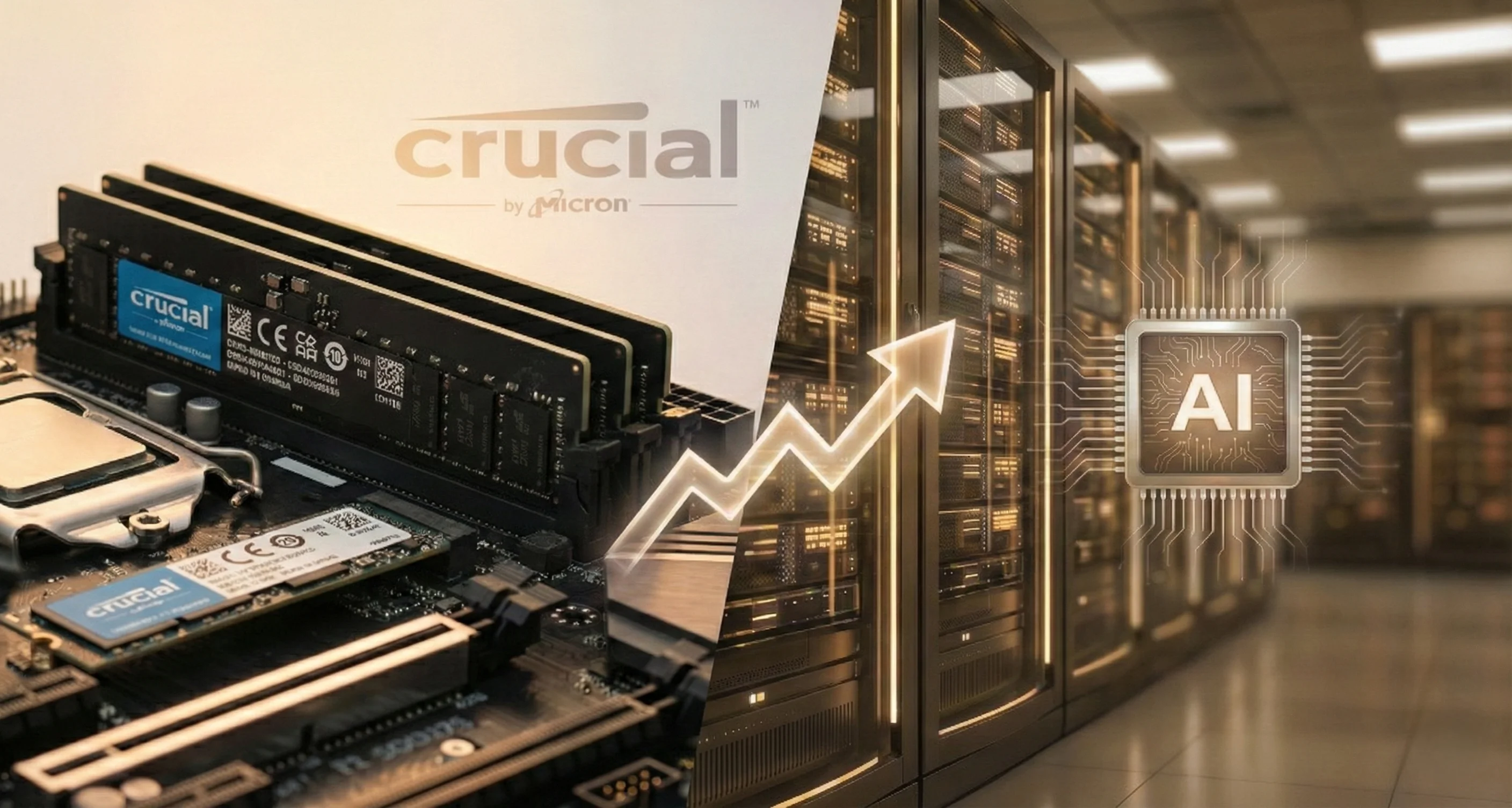
Micron Shuts Crucial: A Blow to PC Builders?
Micron, a major player in the memory and storage industry, recently announced it's ending its Crucial consumer business by February 2026. For nearly 30 years, Crucial has been a go-to brand for PC builders and enthusiasts looking for affordable and reliable RAM and SSDs. But with the rise of AI, Micron is shifting its focus to serve the booming data center market. So, what does this mean for you, the average PC user, and will RAM prices rise even more?
The short answer? Probably.
Why Crucial Is Shutting Down
Micron's decision isn't about Crucial failing; it's about the explosion of AI. As Sumit Sadana, EVP and chief business officer at Micron Technology, stated, "The AI-driven growth in the data center has led to a surge in demand for memory and storage." AI data centers require massive amounts of high-performance memory, and Micron sees a bigger opportunity in catering to these larger, strategic customers.
Training complex AI models requires processing enormous datasets at lightning speed. This demands specialized memory architectures like High Bandwidth Memory (HBM), which offers significantly higher bandwidth and lower power consumption compared to traditional DDR5 RAM. Micron's HBM business is booming, and it's simply more profitable to allocate resources to this market.
The Impact on RAM Prices and Availability
Crucial's exit is happening against a backdrop of already rising RAM prices. Market data shows a drastic spike in costs. A standard 32GB DDR5 kit that you could grab for under $100 just a few months ago is now pushing past $300. High-capacity kits are seeing even steeper hikes. This surge is directly driven by AI companies. They are buying up supply and paying premiums that average consumers simply cannot match.
Micron is leaving the consumer market. This means RAM supply will tighten. Prices will likely rise further. Industry data shows that Micron controls roughly a quarter of the world's DRAM production. This entire capacity is now fully devoted to enterprise clients. That is a massive chunk of the market that no longer serves consumers.
Moreover, other memory manufacturers like Samsung and SK Hynix are also prioritizing the enterprise business, further limiting the supply available for consumers.
What Can You Do?
To mitigate the impact of Micron's decision you should buy sooner rather than later. Prices are unlikely to drop in the near future. Waiting could mean paying even more. You need to be flexible on brands since Crucial is exiting the market. Consider alternatives like Samsung or Corsair. Focus on specifications rather than brand loyalty. You should also watch out for capacity cuts. Manufacturers might ship machines with less RAM to keep prices stable. Pay close attention to configurations. The used market is another option to consider. Be cautious when buying used memory. Ensure it is compatible with your system. Do not hoard components. Hoarding worsens the supply shortage. Buy only what you need.
The Bigger Picture
Micron's decision to discontinue Crucial is more than just a business move; it's a sign of a larger shift in the tech landscape. AI is becoming increasingly dominant, and its demands are reshaping entire industries. The memory market is no exception.
The focus is shifting from consumer PCs to enterprise data centers, where the margins are higher and the demand is more consistent.
This shift could have long-term implications for the PC building community. Affordable and readily available components have been a cornerstone of the DIY PC market for decades. With memory manufacturers prioritizing AI, consumers may face higher prices, fewer choices, and slower upgrades in the years to come.
The Future of Crucial
While Crucial will no longer sell RAM and SSDs directly to consumers, Micron will continue to sell Micron-branded enterprise products to commercial customers. This means that Crucial's technology and expertise will still be used in the enterprise market, just not under the Crucial brand name.
Micron has also stated that it will honor warranties on existing Crucial products and provide support through February 2026. So, if you already own Crucial RAM or SSDs, you don't need to worry about losing support.
Alternatives to Crucial
With Crucial leaving the consumer space, other manufacturers will likely step in to fill the gap. Some potential alternatives include:
- Samsung: A dominant DRAM and NAND supplier with a strong retail presence.
- SK Hynix: A major player in HBM, supplying Nvidia and major cloud providers.
- Corsair: A well-known brand in the PC gaming market, offering a wide range of RAM and SSD products.
- G.Skill: Another popular brand among PC enthusiasts, known for its high-performance memory modules.
- Western Digital/Kioxia: Major NAND and SSD producers that could expand their consumer SSD lines.
Final Thoughts
Micron's decision to discontinue the Crucial consumer business is undoubtedly a blow to PC builders and enthusiasts. The rising demand for memory from AI data centers is putting pressure on the entire memory industry, leading to higher prices and potential shortages for consumers.
While the future of RAM prices remains uncertain, there are steps you can take to mitigate the impact. By buying sooner rather than later, being flexible on brand, and carefully considering your needs, you can ensure that you have the memory you need for your PC without breaking the bank.
It's a turning point in the consumer PC era, and it remains to be seen how the market will adapt. But one thing is clear: AI is changing everything, and the memory industry is just one of the many sectors being reshaped by its influence.
Source: Micron Announces Exit from Crucial Consumer Business
Disclaimer: This content is for informational purposes only. It is based on current market data and news analysis. It does not constitute financial advice. We are not responsible for buying decisions. Component prices and availability can change quickly. Always do your own research before making any purchases.